
How India became a rice powerhouse - and why it's becoming a problem
Context
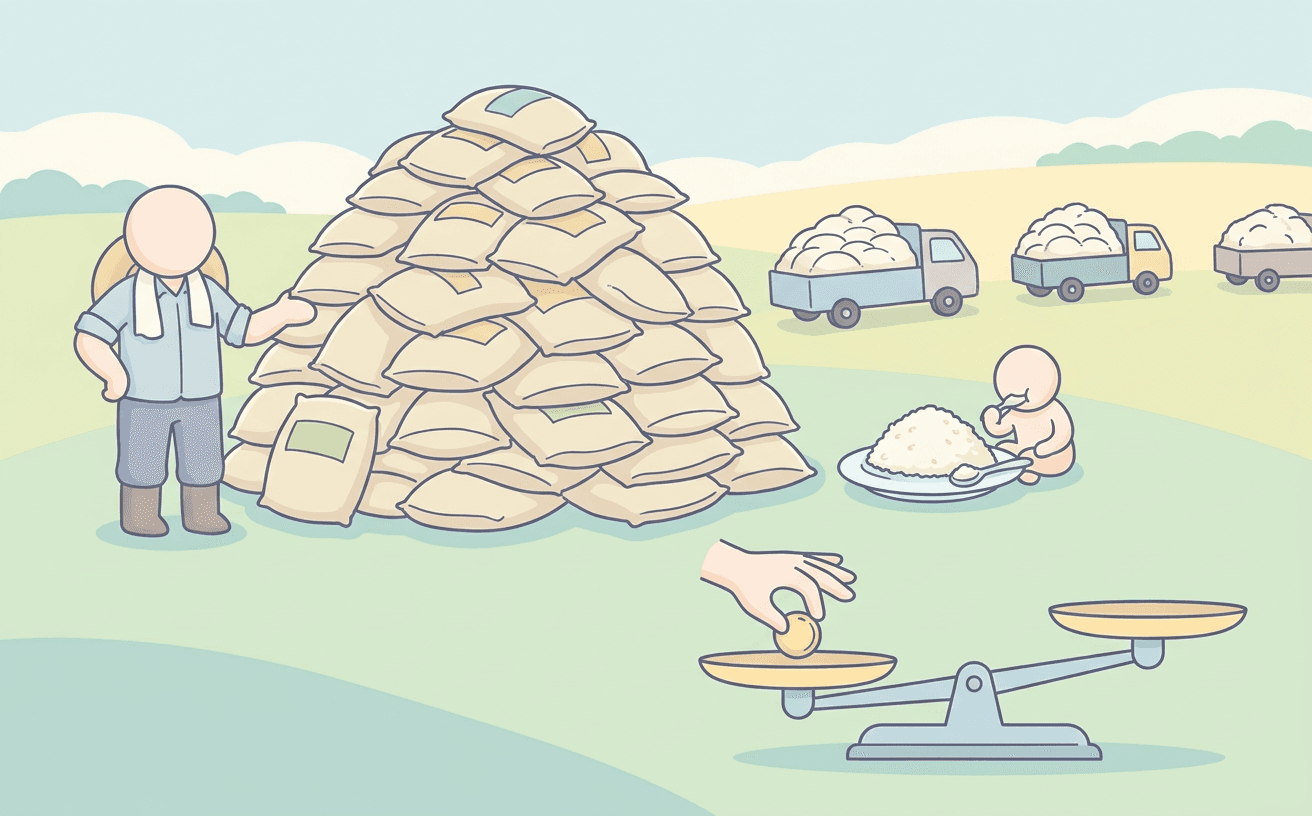
India is experiencing a massive rice surplus, producing 154 million tons against a domestic consumption of 107 million tons. This overproduction, driven by the system and additional state bonuses, is causing severe fiscal strain on the central government through bloated food and fertilizer subsidies, while also triggering international trade disputes and environmental concerns.
Exam perspectives
The core issue highlighted is the distortion of agricultural markets due to open-ended procurement under the Minimum Support Price (MSP) regime. While MSP is crucial for food security, providing a guaranteed floor price, the combination of central MSP and additional state bonuses incentivizes overproduction of water-intensive crops like rice. This leads to a skewed cropping pattern where farmers ignore pulses and oilseeds, which India imports heavily (costing $22.7 billion in 2025). The resulting surplus bloats the food subsidy bill—projected to double to ₹2.28 trillion by 2025/26—and the fertilizer subsidy, as rice is fertilizer-intensive. The government faces a fiscal dilemma: subsidizing excessive production effectively uses taxpayer money to supply cheap rice to international markets, while the Food Corporation of India struggles with a massive storage crisis, holding stocks far exceeding strategic reserve norms. UPSC often asks about the economic viability of MSP and the need for agricultural diversification.
India's agricultural subsidies are a persistent friction point in international trade, particularly at the World Trade Organization (WTO). Rival exporters like the US, Thailand, and Vietnam accuse India of 'dumping'—selling subsidized rice below the cost of production in global markets, thereby depressing global prices. Under the WTO's Agreement on Agriculture (AoA), agricultural subsidies are categorized into 'boxes' (Green, Blue, Amber). India's MSP falls under trade-distorting 'Amber Box' subsidies, which are capped at 10% of the value of production (the de minimis limit). Developing nations often invoke the 'Peace Clause' to shield their food security programs from legal challenge, but continuous overproduction and massive exports weaken India's negotiating position. This surplus complicates bilateral trade negotiations and exposes India to allegations of unfair competition, a critical area for GS Paper 2 on the effects of policies of developed and developing countries on India's interests.
The crisis underscores significant federal tensions and the political economy of agricultural policy in India. While the central government sets the MSP, states often announce bonuses above the MSP for political gains, exacerbating the procurement and storage burden on central agencies. Despite the Union Finance Ministry urging states to halt these bonuses to encourage crop diversification and conserve groundwater, state governments resist, fearing electoral backlash from powerful farming lobbies. The government's inability to rationalize subsidies, highlighted by the repeal of the farm laws after massive protests, demonstrates the difficulty of implementing crucial agricultural reforms. Organizations like NITI Aayog emphasize the need for long-term planning, as projections show output reaching 171 million tons by 2036 against a demand of 110 million tons. This highlights a critical governance challenge: balancing immediate political considerations with long-term ecological and fiscal sustainability.
Key references
AI-generated study notes, sourced from Economic Times. Verify facts and figures with standard sources.