
India among top countries with highest heatwave exposure for infants, older adults: Report
Context
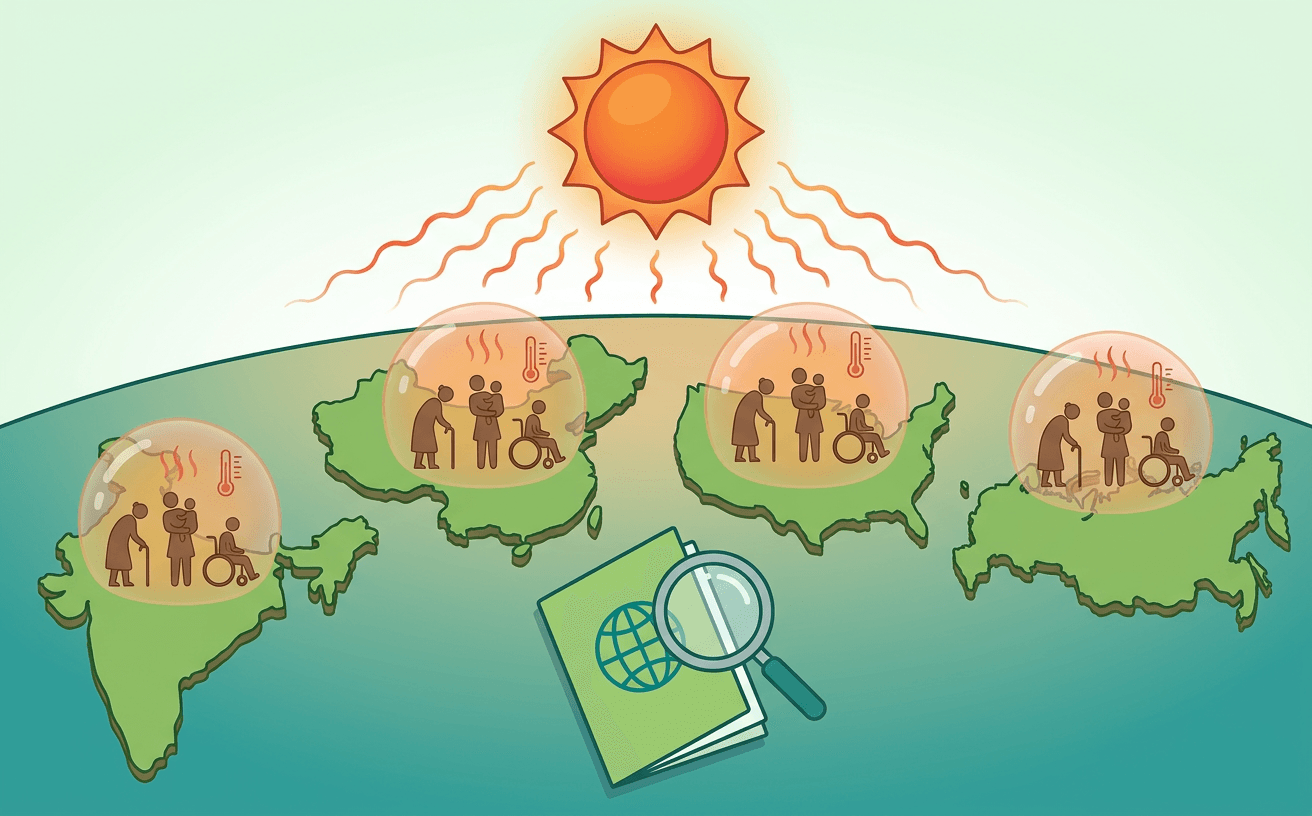
The tenth indicator report of the reveals that India, along with China, the US, and Russia, has the highest heatwave exposure for vulnerable demographics—infants and older adults. The report highlights an alarming acceleration in climate-induced health harms, calling for climate change to be recognized as a .
Exam perspectives
The findings underscore the escalating severity of extreme weather events driven by climate change, specifically heatwaves. The report highlights that global action post the Paris Agreement (2015) is failing to keep pace with warming trends, leading to unprecedented exposure levels. This relates directly to the UPSC syllabus on Climate Change and its impacts. The concept of person-days of exposure illustrates the compounded risk—not just the frequency but the duration and population affected. The demand for formally declaring a Global Health Emergency under the World Health Organization (WHO) signifies a paradigm shift, recognizing that environmental degradation is no longer a distant threat but an immediate public health crisis. This necessitates stronger mitigation strategies, such as aggressive cuts in Greenhouse Gas (GHG) emissions, and adaptation measures, like developing comprehensive Heat Action Plans at local levels.
From a social perspective, the report emphasizes the disproportionate vulnerability of specific demographic groups: infants (whose thermoregulatory systems are still developing) and older adults (often with pre-existing health conditions). This highlights the intersectionality of climate change, where environmental hazards exacerbate existing physiological or social vulnerabilities. In India, where a significant portion of the population engages in outdoor, informal labor, the impact on public health is profound. The estimated heat-linked deaths—exceeding those from major infectious diseases—demand a re-evaluation of health infrastructure readiness. This relates to GS Paper 2 (Issues relating to Health). Addressing this requires integrating climate resilience into health systems, ensuring the availability of cooling centers, early warning systems, and targeted interventions for these high-risk groups, thereby fulfilling the state's obligation to protect the Right to Health, an integral part of Article 21 (Right to Life).
The economic implications of severe heatwaves are substantial, primarily driven by reduced labor productivity and increased healthcare burdens. The report advocates for climate finance to be delivered as grants rather than loans to prevent developing nations from accumulating debt while trying to adapt. This relates to the ongoing global debates on climate justice and the responsibilities of developed nations under the principle of Common But Differentiated Responsibilities (CBDR). In the context of India, persistent heatwaves can significantly impact agricultural output (threatening food security) and industrial productivity, leading to broader macroeconomic instability. The necessity to transition towards clean energy and implement health-protective regulations requires significant capital investment, making the structure and accessibility of international climate finance a critical issue for sustainable development.
Key references
AI-generated study notes, sourced from The Hindu. Verify facts and figures with standard sources.