
India’s minerals policy needs to move to material security
Context
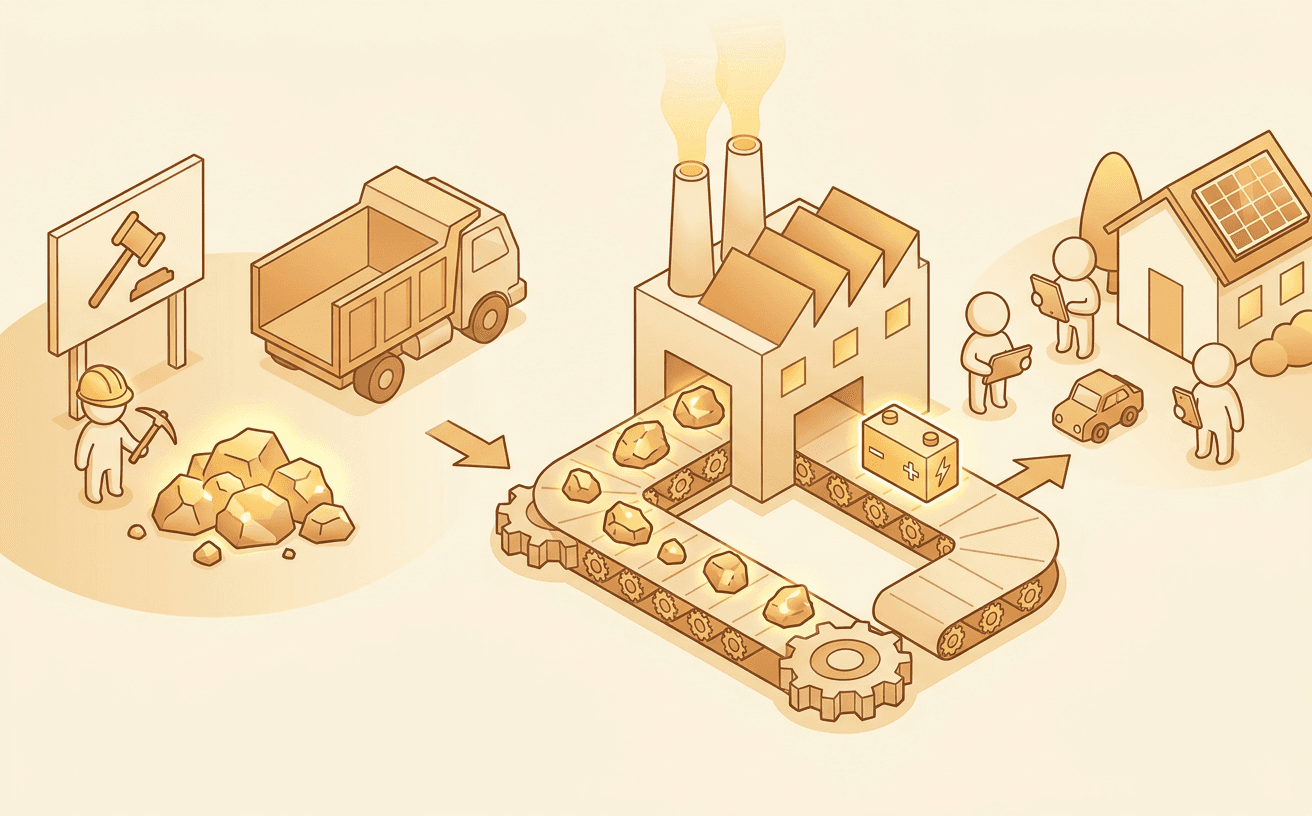
The article emphasizes the need for India to transition its focus from merely auctioning critical mineral blocks to establishing a robust supply chain for these materials, particularly for battery manufacturing. It highlights the government's recent initiatives, including the and amendments to the , aimed at bolstering domestic capabilities. The core argument is that securing raw resources is insufficient; true material security requires developing the processing and manufacturing capacity to utilize them effectively.
Exam perspectives
The economic lens focuses on the shift from primary resource extraction to value addition within the supply chain. While auctioning blocks of minerals like lithium is a crucial first step, the real economic value and strategic advantage lie in the mid-stream processing and manufacturing stages, such as battery production. The National Critical Mineral Mission, with its ₹34,300 crore allocation, aims to incentivize this domestic processing capability. This aligns with the broader goals of Make in India and Atmanirbhar Bharat, seeking to reduce reliance on imports, particularly from dominant players like China. For UPSC, candidates should understand the concept of value chains and the economic rationale for promoting downstream industries over mere resource export, linking it to industrial policy and trade balances.
The article touches upon the regulatory framework governing resource extraction in India. The amendment to the Mines and Minerals (Development and Regulation) Act, 1957 (MMDR Act) is a significant policy shift. By empowering the central government to auction 24 critical minerals, the state is taking a more proactive role in securing strategic resources. This represents a move towards a more centralized approach for minerals deemed essential for national security and the energy transition. UPSC aspirants should analyze the balance between central control for strategic reasons and the traditional role of state governments in managing mineral resources, as well as the efficacy of the auction mechanism in ensuring transparent and efficient resource allocation.
The underlying motivation for this policy shift is the global energy transition towards low-carbon technologies. Minerals like lithium, cobalt, and rare earth elements are indispensable for electric vehicles (EVs) and renewable energy storage. Securing these materials is not just an economic imperative but also crucial for India to meet its climate commitments, such as achieving Net Zero emissions by 2070. However, the mining and processing of these minerals often have significant environmental footprints, including water consumption and pollution. The UPSC examination often explores this trade-off between the environmental costs of extraction and the environmental benefits of the resulting green technologies, requiring candidates to evaluate strategies for sustainable mining practices within the framework of the National Critical Mineral Mission.
Key references
AI-generated study notes, sourced from The Hindu. Verify facts and figures with standard sources.