
Making India’s food system climate-proof cannot wait
Context
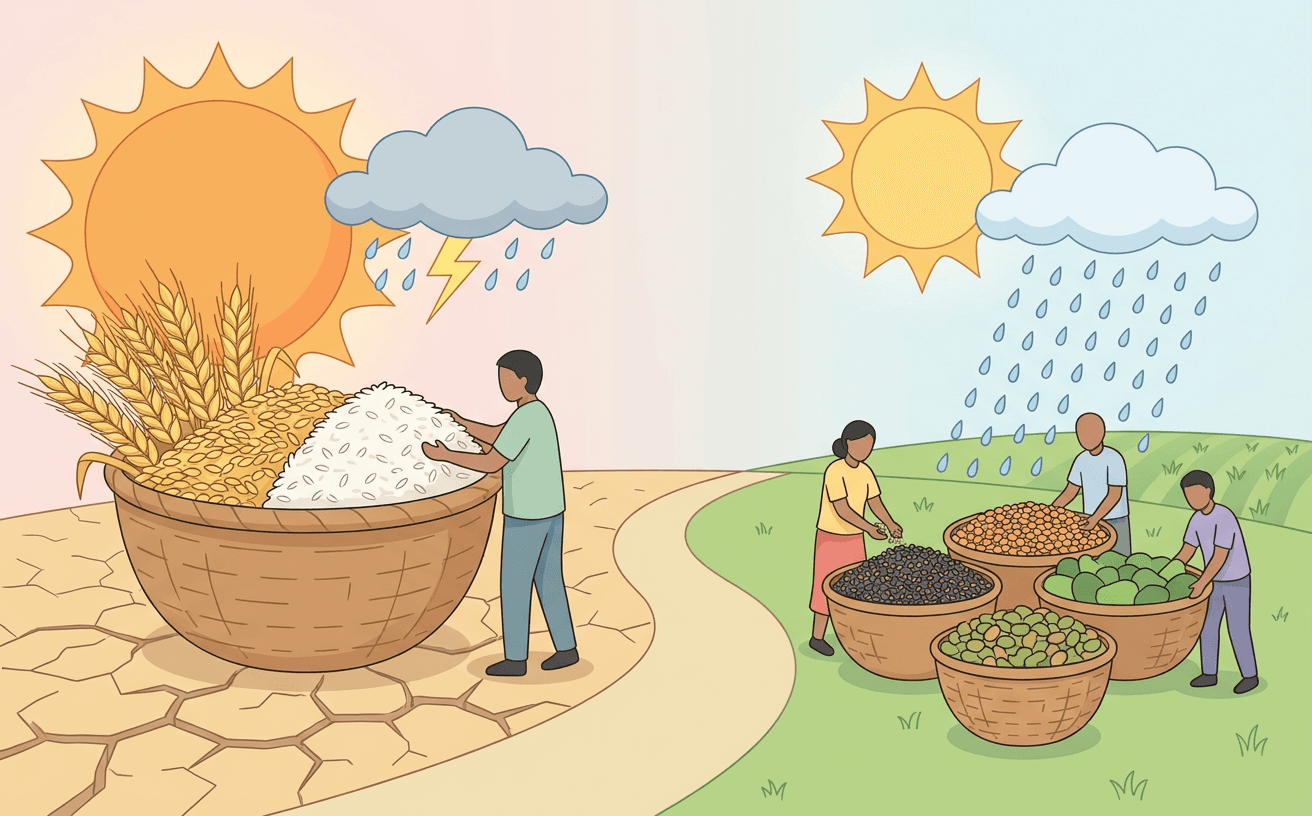
India's model, built heavily on the rice-wheat system and centralized procurement, is increasingly vulnerable to climate change. The authors advocate for transitioning from a basic 'food security' approach to a **climate-resilient food systems** framework. This involves diversifying procurement to include climate-hardy crops like millets and integrating climate risk management across the entire agricultural value chain, from production to the .
Exam perspectives
India's current agricultural procurement strategy is heavily skewed towards the rice-wheat cropping system, primarily concentrated in a few states like Punjab and Haryana. While this model historically ensured food security and built essential buffer stocks, it now faces severe diminishing returns due to groundwater depletion and vulnerability to heatwaves. The authors propose diversifying Minimum Support Price operations and public procurement to include nutri-cereals (millets), pulses, and oilseeds. This shift is economically crucial as it aligns price support with crops suited to local agro-climatic zones, reducing the systemic risk of localized crop failures and promoting crop diversification. Expanding the procurement base beyond cereals can create a more resilient national portfolio, mitigating the market volatility often triggered by extreme weather events and ensuring stable incomes for farmers across diverse geographies.
The article highlights the cascading impacts of climate change on the entire food value chain, moving the focus beyond just agricultural production. Heatwaves suppress wheat yields (as seen in 2022), while erratic monsoons lead to both floods and droughts, severely impacting the traditional agriculture model. The current reliance on water-intensive crops in water-stressed regions exacerbates groundwater depletion, creating a vicious cycle of environmental degradation. A transition towards a climate-resilient food system requires integrating agriculture into India's net-zero pathway. This involves measurable emission reductions, enhancing carbon sequestration in soils, and building flood-resilient storage infrastructure. Furthermore, adopting climate-smart agriculture practices—such as using climate-resilient seed varieties, micro-irrigation, and precision farming—is essential to reduce the vulnerability of the agricultural sector to erratic weather patterns.
The transition to sustainable food security necessitates significant governance reforms, particularly within the framework of the National Food Security Act (NFSA), 2013. The article argues for embedding climate risk management as a core design parameter in NFSA planning, rather than treating it as an externality. This means the Public Distribution System, supported by initiatives like One Nation One Ration Card, must progressively distribute a diversified food basket, including locally appropriate millets, to connect food security with nutritional outcomes and climate adaptation. Furthermore, the governance framework needs to enhance its early warning systems by linking India Meteorological Department forecasts directly with procurement and buffer-stock decisions. Exploring a 'climate buffer'—a diversified portfolio of crops, resilient infrastructure, and weather-indexed insurance—is proposed as a strategic governance tool to manage the systemic risks associated with a less predictable climate.
Key references
AI-generated study notes, sourced from The Hindu. Verify facts and figures with standard sources.