
News in Frames | Living with the wounds of displacement
Context
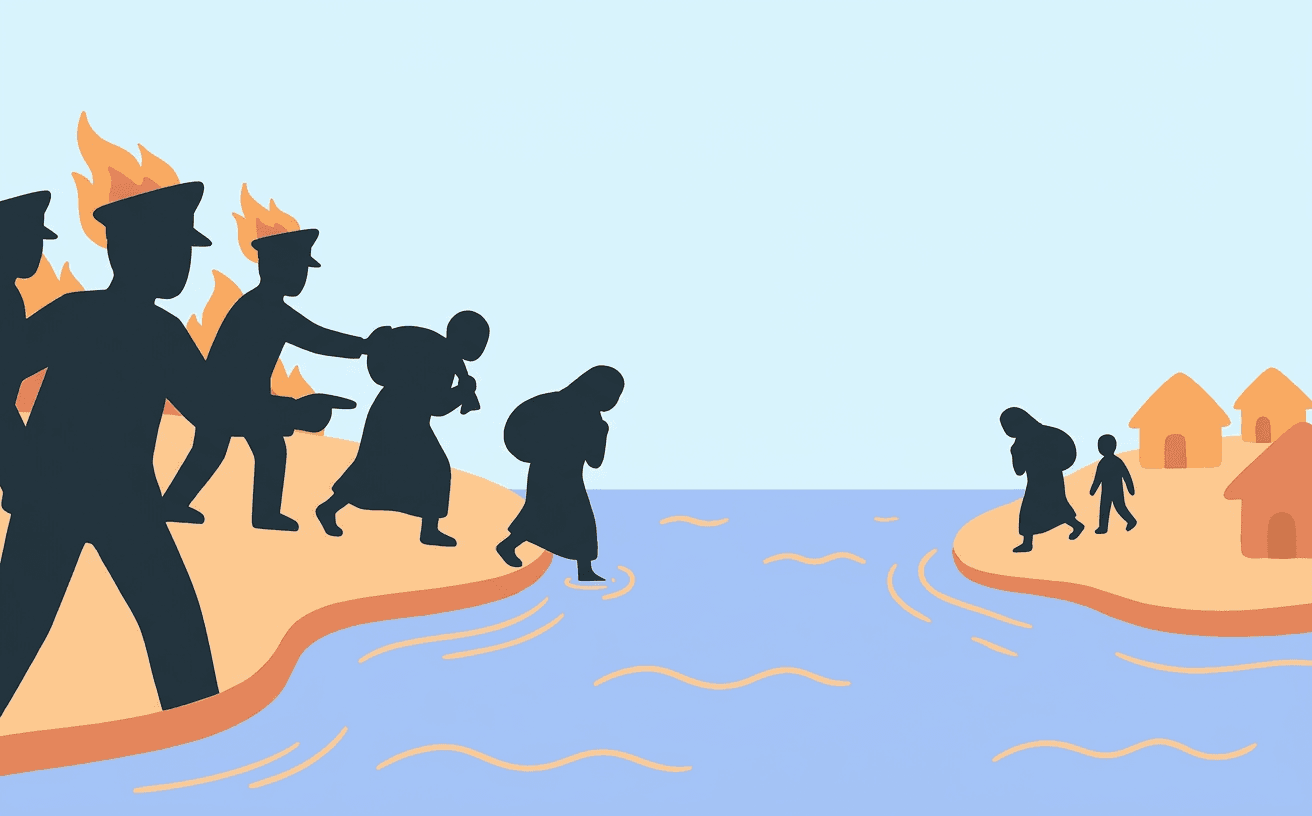
The ruled that Myanmar committed genocide against the Rohingya minority during military operations in Rakhine State in 2017. The Rohingya have faced decades of discrimination and persecution, leading to mass displacement, primarily to Bangladesh, but also to other countries including India, Malaysia, and Indonesia. Despite the landmark ruling, the return of refugees remains unlikely due to ongoing conflict in Myanmar between the military and the Arakan Army.
Exam perspectives
The International Court of Justice (ICJ) is the principal judicial organ of the UN, tasked with settling legal disputes between states. This ruling marks the first time the court has held a nation responsible for genocide, setting a crucial legal precedent under international law. However, the ICJ lacks an enforcement mechanism, meaning its rulings often rely on the UN Security Council or international pressure for compliance. For UPSC, understanding the mandate of the ICJ compared to the International Criminal Court (ICC) is vital. The ICC prosecutes individuals for crimes against humanity, while the ICJ deals with state-level accountability. The ongoing instability in Myanmar, particularly the conflict with the Arakan Army, complicates any potential repatriation efforts, highlighting the limits of international legal rulings in active conflict zones.
The Rohingya crisis illustrates a severe case of statelessness and systemic discrimination. Denied citizenship under Myanmar's 1982 Citizenship Law, the Rohingya lack fundamental rights, including freedom of movement, education, and healthcare. This creates a highly vulnerable population susceptible to human trafficking and exploitation. The displacement has created one of the world's largest refugee camps in Cox's Bazar, Bangladesh, leading to overcrowding, resource depletion, and security concerns. From a UPSC perspective, this highlights the social dimensions of forced migration, including the psychological trauma of displacement, the loss of livelihoods, and the intergenerational impact on education and development within refugee populations. The situation demands international humanitarian intervention and highlights the need for a comprehensive framework for refugee protection.
The mass exodus of Rohingya has significant regional implications, particularly for neighboring countries like Bangladesh and India. India, which is not a signatory to the 1951 Refugee Convention, approaches the Rohingya issue primarily through a security and domestic political lens, often viewing them as illegal immigrants rather than refugees. The crisis strains bilateral relations, particularly between Myanmar and Bangladesh, over repatriation agreements that remain unfulfilled due to safety concerns. For UPSC candidates, analyzing India's nuanced stance is critical: balancing its strategic interests in Myanmar (to counter Chinese influence and secure its northeastern borders) with human rights concerns and pressure from the international community. The crisis underscores the complexities of regional stability and the challenges of managing cross-border migration in South Asia.
Key references
AI-generated study notes, sourced from The Hindu. Verify facts and figures with standard sources.