
Operation Trident: India’s Biggest Strike Against Drug Cartels Yet? | The Hindu Editorial
Context
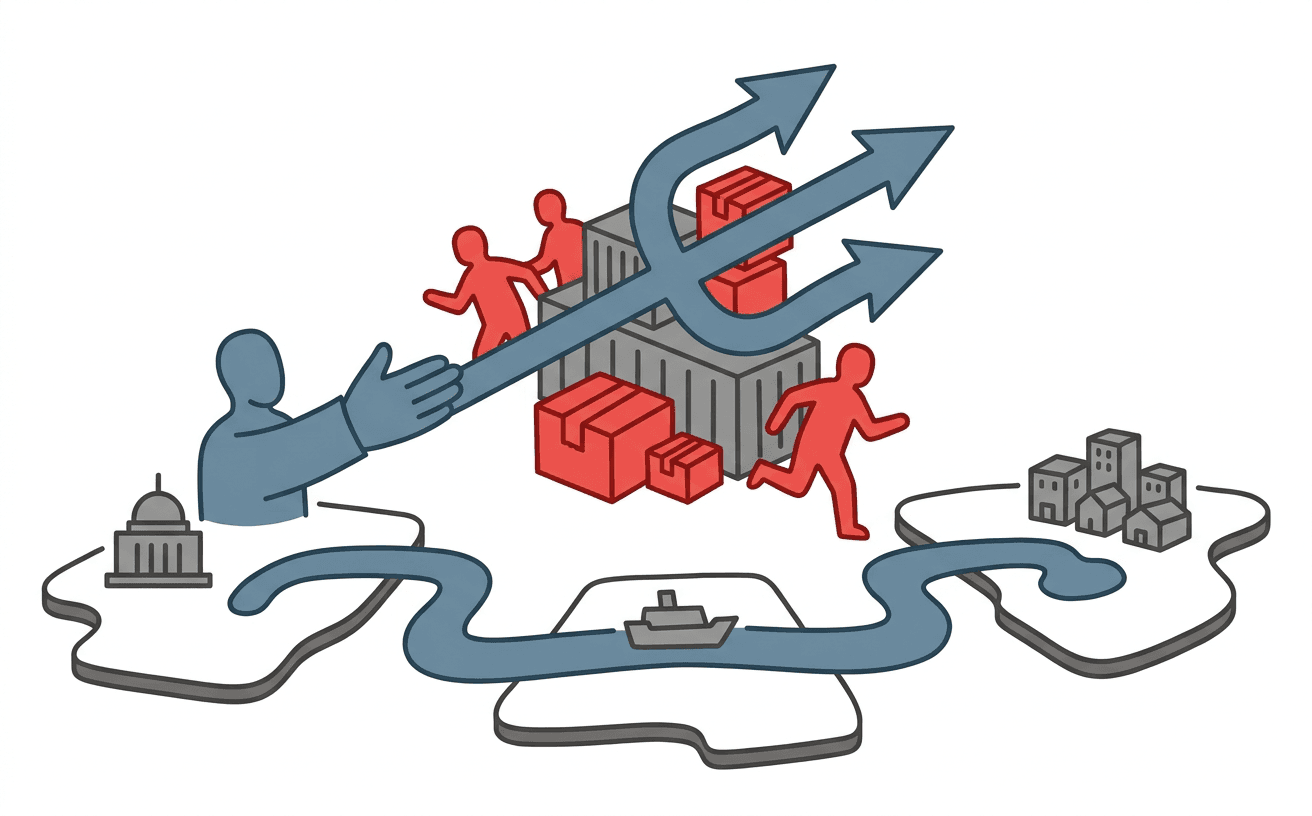
The Indian government has launched Operation Trident, a major anti-narcotics initiative targeting international drug syndicates operating within the India-Myanmar-Bangladesh corridor. This operation is a key component of the newly formulated Vision Document on Drug Control 2026-2029, which seeks to dismantle drug cartels and eliminate organized narcotics networks by 2029. The operation highlights the growing security threat posed by transnational organized crime in India's neighborhood.
Exam perspectives
Operation Trident directly addresses the crucial UPSC syllabus topic of Organized Crime and its linkages with Terrorism (Narco-Terrorism). The India-Myanmar-Bangladesh corridor is particularly vulnerable due to its proximity to the Golden Triangle (the notorious drug-producing region comprising Myanmar, Laos, and Thailand). The influx of narcotics not only fuels addiction, which is a significant social problem, but the illicit profits are often routed to fund insurgent and terrorist activities, destabilizing internal security. The implementation of the Vision Document on Drug Control 2026-2029 demonstrates a shift from reactive seizures to a strategic, intelligence-led approach aimed at dismantling the entire network, including the financial infrastructure (money laundering) of these cartels. UPSC aspirants must understand the role of the Narcotics Control Bureau (NCB) as the nodal agency for coordinating drug law enforcement actions in India under the Narcotic Drugs and Psychotropic Substances Act, 1985.
The operation underscores the complexities of Border Management along India's porous eastern borders. The Free Movement Regime (FMR) with Myanmar (recently suspended by India) and the difficult terrain (dense forests and riverine borders) make patrolling and intelligence gathering challenging for agencies like the Assam Rifles and the Border Security Force (BSF). This issue necessitates robust Bilateral Relations and intelligence sharing with neighboring countries. Effective control of the India-Myanmar-Bangladesh drug corridor requires coordinated efforts, such as joint operations and mutual legal assistance treaties (MLATs), to prosecute transnational offenders. The situation in Myanmar, particularly post-coup instability, exacerbates the problem, as non-state actors often control drug-producing territories. Questions in GS Paper 2 and 3 frequently explore the challenges of managing borders shared with politically unstable neighbors.
The success of the Vision Document relies heavily on effective Inter-Agency Coordination. Dismantling cartels requires the Narcotics Control Bureau (NCB) to work seamlessly with state police forces, the Enforcement Directorate (ED) (to track money laundering under the Prevention of Money Laundering Act), and intelligence agencies like the Intelligence Bureau (IB). The document's goal of improving prosecution rates highlights a critical flaw in the current system: low conviction rates due to procedural lapses and lack of robust forensic evidence. Strengthening the judicial infrastructure, including setting up fast-track courts and improving forensic capabilities (like the Central Forensic Science Laboratory), is essential for the policy's success. UPSC often evaluates the gap between policy formulation (the Vision Document) and policy implementation (ground-level coordination and conviction rates).
Key references
AI-generated study notes, sourced from The Hindu. Verify facts and figures with standard sources.