
Organisation founded 80 years ago struggling to deliver peace today: India on need for UNSC reforms
Context
India's Permanent Representative to the UN, Harish Parvathaneni, delivered a strong statement at the advocating for urgent reforms in the (UNSC). India argued that the UNSC, rooted in the geopolitics of 1945, suffers a 'deficit in legitimacy' and is failing to manage contemporary global conflicts. India is pushing for expansion in both permanent and non-permanent categories, criticizing the current (IGN) process for lacking a negotiating text.
Exam perspectives
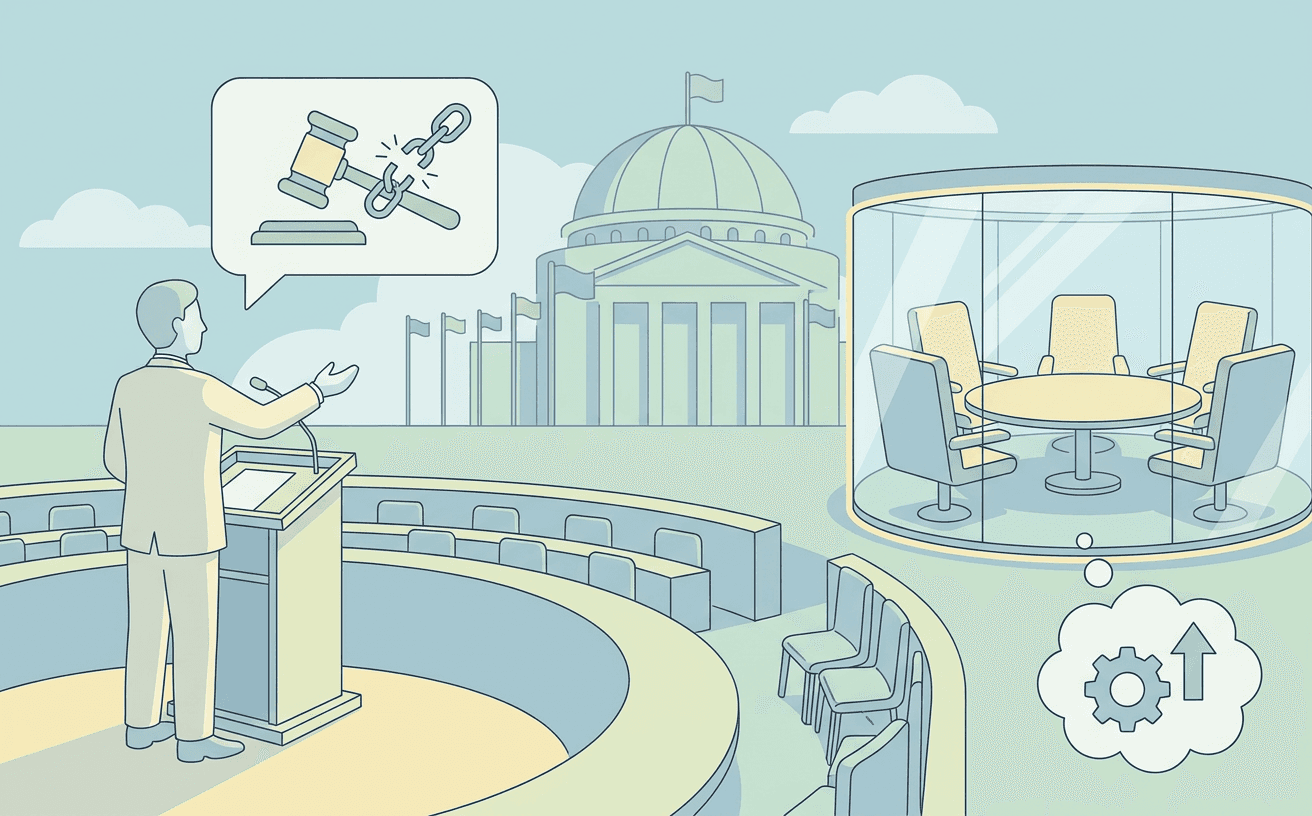
The core issue highlighted is the deficit in legitimacy of global governance structures when they fail to represent current realities. The UN Security Council, established in 1945, reflects the power dynamics of the post-WWII victors. Its structure—five permanent members with veto power (P5) and 10 rotating non-permanent members—creates a structural imbalance. India points out the gross under-representation of the Global South: the Asia-Pacific region (60% of world population), Africa, and Latin America are inadequately represented compared to Europe (which holds two permanent and three elected seats). This lack of equitable geographic representation weakens the UNSC's moral authority and effectiveness in resolving modern conflicts. From a UPSC perspective, this illustrates the tension between historical institutional design and the demand for democratised global governance. Candidates should prepare to discuss the need for institutional reform in multilateral bodies to reflect multipolarity and ensure their continued relevance.
The article critiques the Intergovernmental Negotiations (IGN) framework, exposing the procedural hurdles in achieving UN reform. The IGN is an informal UNGA body intended to negotiate UNSC reform. India’s frustration stems from the lack of a negotiating text; instead of drafting and debating a concrete proposal, member states merely exchange statements. India argues that 'convergences are not consensus' and that without a text, the process merely perpetuates the status quo. Furthermore, India rejects the idea of creating a 'two-tier' permanent membership (where new permanent members wouldn't have veto power), arguing it would institutionalize inequality. This highlights the governance challenge within the UN system itself—how the rules of procedure can be used by entrenched powers to stall structural change. UPSC questions often focus on India’s specific demands for UNSC reform and the systemic obstacles it faces in achieving them.
India strategically invoked historical contributions to bolster its claim for a permanent seat, noting the sacrifices of 2.5 million Indian soldiers in WWII and the millions who died in the Bengal famine due to colonial policies. This narrative counters the UNSC's foundation as an organization 'of the victors, for the victors'. India's bid for a non-permanent seat for the 2028-29 term is part of a broader strategy to maintain a strong presence in the council while advocating for structural change. The geopolitical reality is that power has shifted away from the Euro-Atlantic center towards Asia and the Global South. A reformed UNSC that includes powers like India, Brazil, Japan, and Germany (the G4 nations) and African representation (the Ezulwini Consensus) is essential for global stability. For UPSC Mains, candidates must analyze how India leverages its demographic dividend, historical contributions, and growing economic clout to argue for a leadership role in a reformed global order.
Key references
AI-generated study notes, sourced from The Hindu. Verify facts and figures with standard sources.