
Seven Rameswaram fishermen detained by Sri Lankan Navy near Katchatheevu islet
Context
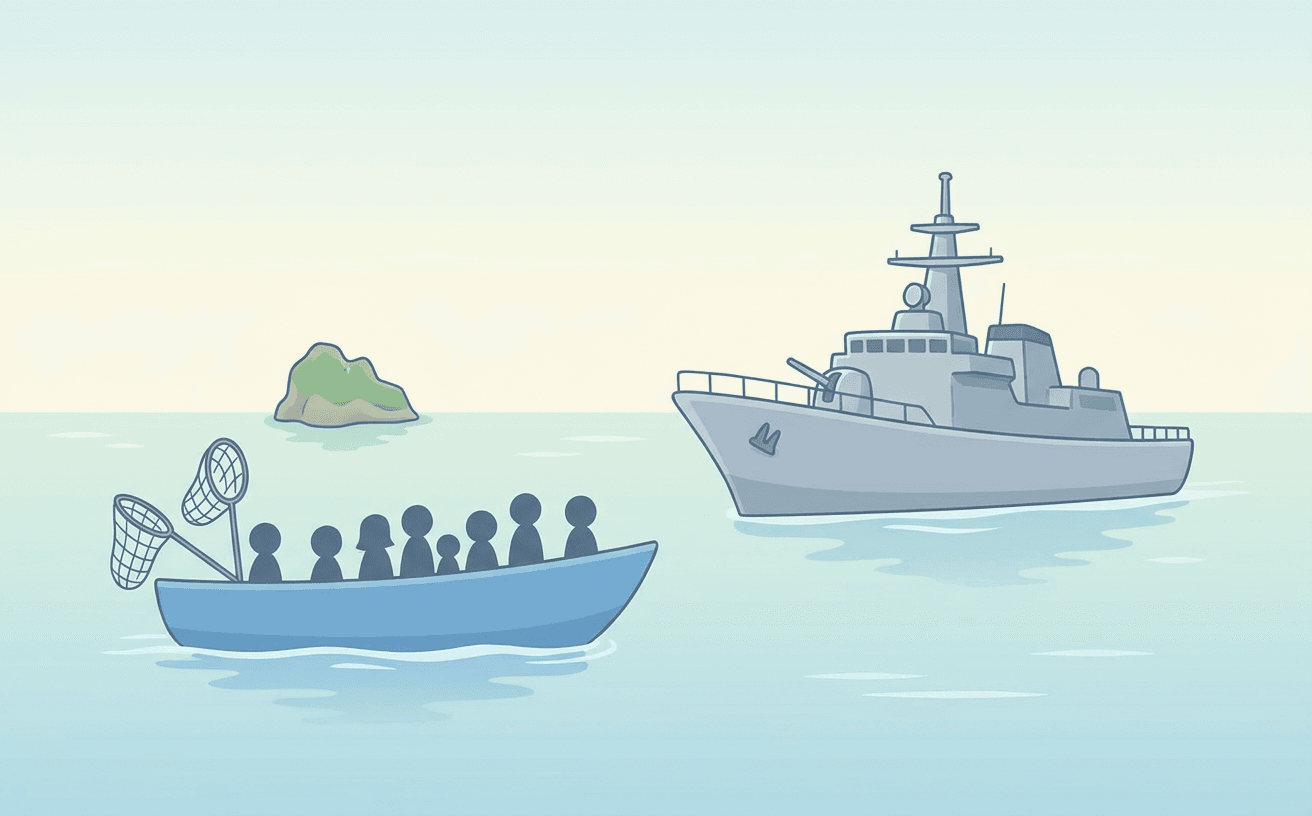
Seven Indian fishermen from Tamil Nadu were detained by the Sri Lankan Navy near the islet for alleged poaching in international waters. This recurring issue highlights the unresolved maritime boundary disputes and livelihood struggles in the Palk Bay region, straining .
Exam perspectives
The frequent arrest of Indian fishermen by Sri Lanka is a persistent irritant in India-Sri Lanka relations. The core issue stems from differing interpretations of the International Maritime Boundary Line (IMBL), established by the 1974 and 1976 agreements. While these agreements ceded Katchatheevu to Sri Lanka, Indian fishermen continue to fish in traditional waters, often crossing the IMBL, due to depletion of catch on the Indian side. Sri Lanka views this as poaching and a violation of its sovereignty, leading to arrests and confiscation of trawlers. This recurring friction demands diplomatic engagement to find a mutually acceptable solution, balancing the livelihood concerns of Tamil Nadu fishermen with Sri Lanka's territorial rights. UPSC often asks about the complexities of bilateral relations and the impact of domestic politics (Tamil Nadu's stance) on foreign policy.
The geographical context of the Palk Bay is crucial to understanding this conflict. The Palk Bay is a narrow stretch of water separating Tamil Nadu from the Northern Province of Sri Lanka. The International Maritime Boundary Line (IMBL) runs through this narrow strait. The proximity of the coastlines makes unintentional crossings frequent, especially during pursuit of fish shoals. The Katchatheevu islet, located near the IMBL, historically served as a resting and net-drying spot for Indian fishermen. The 1974 agreement, which recognized Sri Lankan sovereignty over the islet, restricted these traditional rights, exacerbating the conflict. From a UPSC Geography perspective, understanding the location of the Palk Strait, Gulf of Mannar, and Katchatheevu is important for map-based questions.
The issue involves complex governance challenges regarding marine resource management and the livelihoods of coastal communities. The depletion of marine resources on the Indian side of the Palk Bay, partly due to unsustainable fishing practices like bottom trawling, pushes Indian fishermen towards Sri Lankan waters. The Indian government has initiated schemes like the Pradhan Mantri Matsya Sampada Yojana (PMMSY) and the scheme for diversification of trawl fishing to deep-sea fishing to mitigate this. However, implementation challenges remain. Effective governance requires a multi-pronged approach: promoting sustainable fishing, providing alternative livelihoods, and establishing robust mechanisms for early warning and conflict resolution at sea, perhaps involving the Coast Guards of both nations. UPSC Mains questions often focus on the socio-economic dimensions of such conflicts and the effectiveness of government interventions.
Key references
AI-generated study notes, sourced from The Hindu. Verify facts and figures with standard sources.