
Supreme Court bans construction within 100 metres of Jojari River in Rajasthan
Context
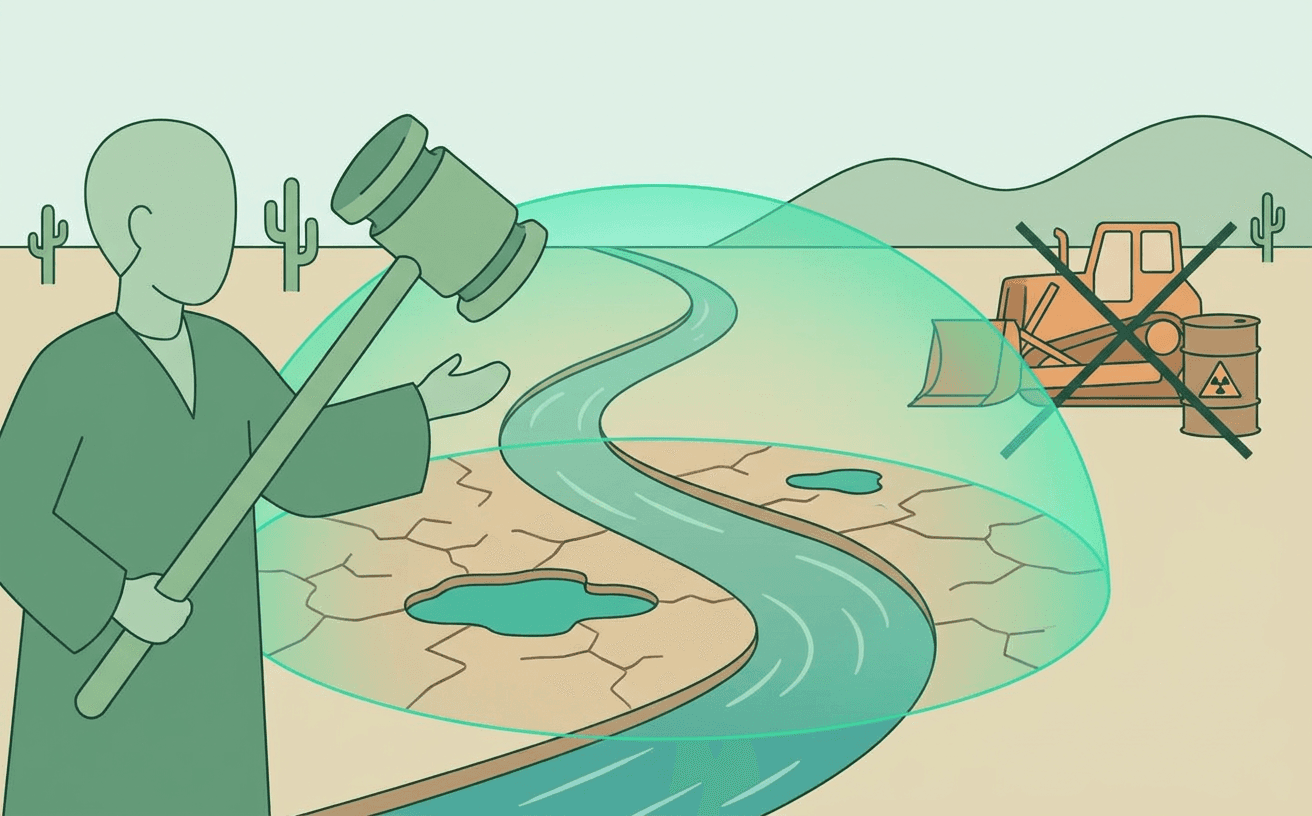
The has intervened to protect the seasonal rivers of Rajasthan—Jojari, Bandi, and Luni—by banning construction within 100 meters of the Jojari River and prohibiting hazardous industries within 500 meters of its flow path. The Court has also directed the Rajasthan government to formulate a comprehensive 20-point resolution plan to address the severe industrial contamination threatening these critical water sources in a water-scarce state. The judgment highlights the acute problem of industrial pollution, particularly from the textile clusters in Pali and Balotra.
Exam perspectives
This case is a classic example of industrial development conflicting with environmental sustainability, a core theme in GS Paper 3. The contamination of the Luni river system, primarily by textile dyeing and printing units in Pali and Balotra, severely impacts local ecology and groundwater. The Supreme Court directive establishing buffer zones—100m for construction and 500m for hazardous industries—reflects the application of the Precautionary Principle, which mandates proactive measures to prevent environmental harm even without absolute scientific certainty. The rivers mentioned are seasonal, meaning their flow depends heavily on the monsoon; consequently, industrial effluent often forms the entire dry-season flow, leading to concentrated toxicity. For UPSC, this connects to the broader mandate of the Water (Prevention and Control of Pollution) Act, 1974 and the role of the State Pollution Control Boards in regulating industrial effluent discharge. Candidates should understand how river buffer zones (often termed 'River Regulation Zones', though a national policy remains pending) act as ecological safeguards by preventing floodplain encroachment and reducing direct pollution runoff.
The Supreme Court taking a suo motu (on its own motion) case demonstrates the ongoing trend of judicial activism in environmental matters. Under Article 21 of the Constitution, the right to a clean environment is recognized as an integral part of the right to life. The Court's intervention often occurs when the executive—in this case, the state government and pollution control boards—fails to enforce existing environmental laws effectively, leading to what is termed 'regulatory capture' or apathy. The directive for the State to prepare a '20-point resolution plan' showcases the judiciary stepping into the realm of policy formulation and executive oversight, issuing continuing mandamus (ongoing judicial monitoring of executive action). This raises questions for GS Paper 2 regarding the separation of powers; while necessary for protecting fundamental rights, continuous judicial intervention in administrative matters highlights the systemic failure of statutory bodies like the Central Pollution Control Board and state counterparts.
The geographical context is vital for Prelims. The Luni River (often called the 'Salt River') is the largest river in the Thar Desert of northwest India. It originates in the Aravalli Range near Pushkar and ends in the marshy lands of the Rann of Kutch in Gujarat. It is an endorheic river, meaning it does not flow into the sea. The Jojari (which uniquely joins the Luni from the right bank, unlike other tributaries) and the Bandi are its crucial tributaries. The region is already 'water-starved,' making surface water contamination highly critical. The Supreme Court's observation regarding the potential relocation of entire industrial areas (like Pali) underscores the concept of carrying capacity—the maximum population or industrial activity an environment can sustain without degradation. Relocating industries away from river banks is a drastic but necessary geographical intervention to restore the ecological flow and quality of seasonal desert river systems.
Key references
AI-generated study notes, sourced from The Hindu. Verify facts and figures with standard sources.