
Supreme Court terms vehicular emissions major contributor to air pollution in Delhi-NCR
Context
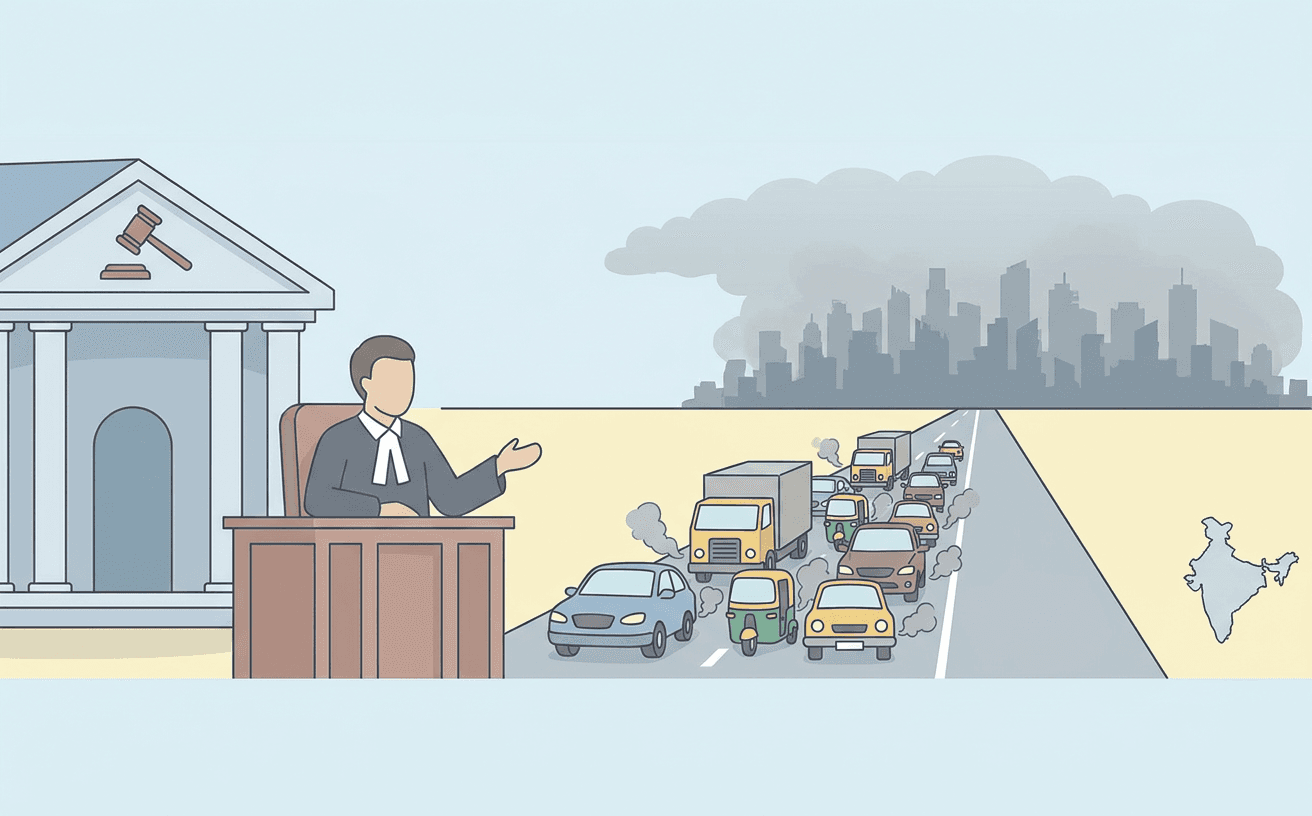
The , hearing a suo motu case on Delhi-NCR's air pollution, identified vehicular emissions as a major contributor to the region's deteriorating , which is approaching 'severe' levels. The Court highlighted the need for immediate and long-term measures, emphasized the vulnerability of the poor, and sought expert opinion on closing schools, while the Centre outlined its regulatory framework covering vehicular, industrial, and construction pollution, as well as stubble burning.
Exam perspectives
The Air Quality Index (AQI) is a tool to communicate how polluted the air currently is or how polluted it is forecast to become. It transforms complex air quality data of various pollutants into a single number, nomenclature, and color. The System of Air Quality and Weather Forecasting and Research (SAFAR), developed by the Indian Institute of Tropical Meteorology, is crucial for tracking this. The Court's focus on vehicular emissions highlights the growing impact of transport on urban air quality, overshadowing traditional culprits like stubble burning, which accounted for only 14% on the given day. UPSC often asks about the sources of Particulate Matter (PM 2.5 and PM 10) and the effectiveness of measures like the Graded Response Action Plan (GRAP), which prescribes specific actions at different AQI levels.
The Supreme Court's intervention via a suo motu cognizance (taking up a case on its own without a formal petition) demonstrates judicial activism in matters of environmental protection. This is rooted in the expansive interpretation of Article 21 of the Constitution, which guarantees the fundamental right to a pollution-free environment as part of the right to life. The court's role in monitoring executive action (like geo-tagging PUC certificates and regulating traffic) reflects the continuing challenge of environmental governance where executive agencies often fail to implement statutory laws effectively. This tension between judicial oversight and executive responsibility is a classic theme in GS Paper 2, focusing on the role of the judiciary in enforcing environmental rights.
The Centre’s regulatory framework, as presented by the Additional Solicitor General, targets five sectors: industrial, vehicular, construction, road dust, and stubble burning. The effectiveness of this framework relies heavily on bodies like the Commission for Air Quality Management (CAQM) in the NCR and Adjoining Areas, established to coordinate efforts across multiple states. However, the persistence of the problem highlights a significant governance deficit: the challenge of inter-state coordination (Delhi, Punjab, Haryana, UP) and the failure of implementation at the municipal level (e.g., controlling road dust). The mention of the poor suffering the most brings in a crucial equity dimension, showing how environmental degradation disproportionately affects marginalized communities, a key analytical point for GS Paper 2.
Key references
AI-generated study notes, sourced from The Hindu. Verify facts and figures with standard sources.