
The need for a national media council
Context
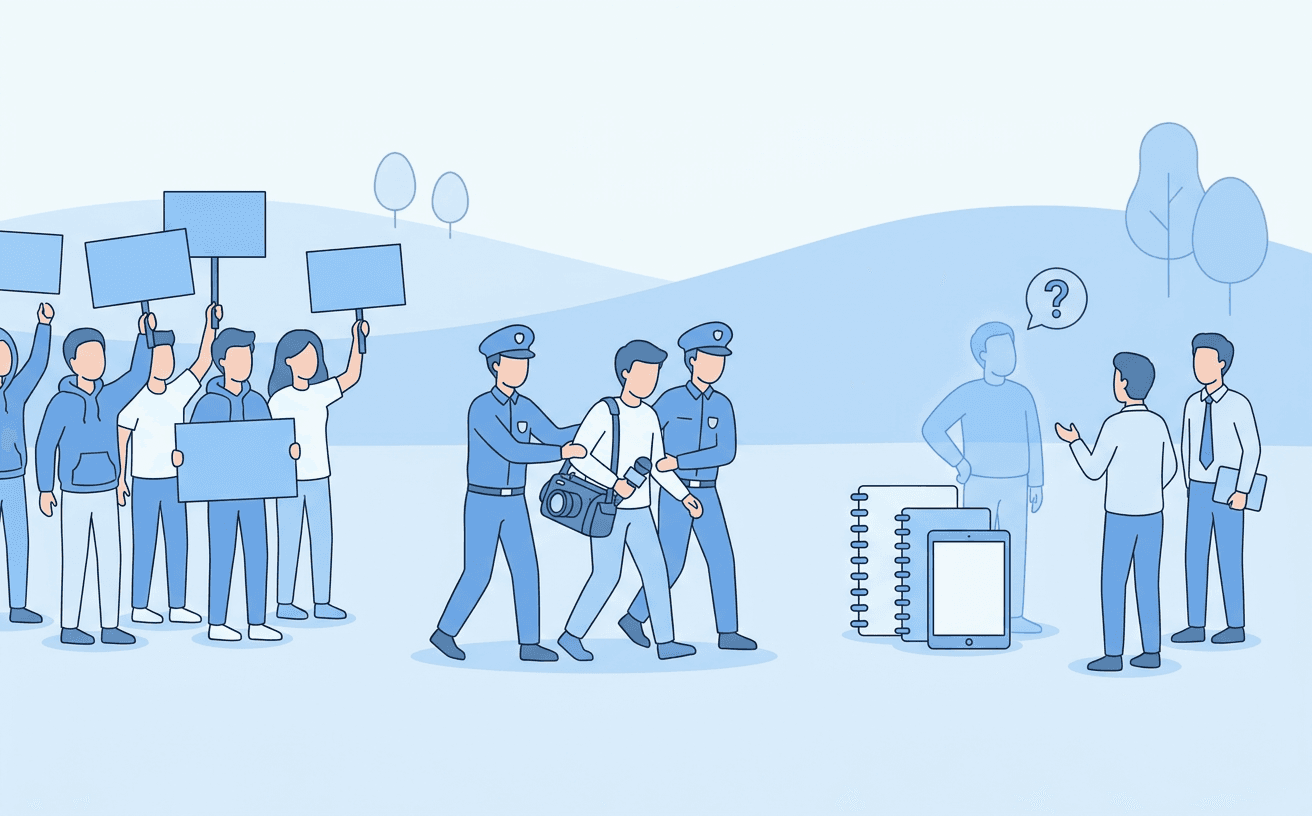
Recent protests and the subsequent crackdown on journalists have reignited the debate surrounding the definition and accreditation of journalists in India. The lack of a standardized system has led to situations where independent creators face hurdles, while authorities struggle to distinguish between legitimate journalists and individuals seeking social media engagement. This has prompted calls for a national media council to regulate the profession and protect journalistic rights.
Exam perspectives
The debate touches upon Article 19(1)(a) of the Indian Constitution, which guarantees the right to freedom of speech and expression. However, this right is not absolute and is subject to reasonable restrictions under Article 19(2), including public order and the sovereignty and integrity of India. The Supreme Court's observation highlights the tension between an individual's right to disseminate information and the need to regulate the profession to prevent misuse, especially by individuals masquerading as journalists for personal gain. The existing framework relies heavily on government accreditation through the Press Information Bureau (PIB) or State Directorate of Information and Publicity (DIP), which acts as a gatekeeper, raising concerns about potential government control over media access. UPSC aspirants should analyze whether a statutory body is needed to balance these competing interests.
The article proposes the establishment of a national media council, drawing parallels with professional regulatory bodies like the Bar Council of India for lawyers or the Institute of Chartered Accountants of India (ICAI). Currently, the Press Council of India (PCI) primarily focuses on print media and acts as a watchdog rather than a licensing authority. A new council could standardize the definition of a working journalist, perhaps mandating specific qualifications, as suggested in the article. This addresses the ambiguity in current definitions, such as those found in the Occupational Safety, Health and Working Conditions Code, 2020. The challenge lies in designing a body that ensures professional standards and accountability without becoming an instrument of state censorship. The governance challenge is to create a self-regulatory or statutory mechanism that protects independent journalism while curbing the spread of unverified information by untrained content creators.
The role of media and social media is a crucial component of internal security. The proliferation of content creators and self-proclaimed independent journalists during protests, as seen in the recent events, can complicate crowd management and potentially exacerbate tensions if unverified or sensationalized information is rapidly disseminated. Law enforcement agencies face the practical difficulty of distinguishing between bona fide journalists covering the event and individuals participating in or instigating unrest while using media credentials as a shield. The Solicitor General's concern regarding individuals 'sensationalising events' for social media popularity directly relates to the broader challenge of fake news and its impact on public order. A structured accreditation system, universally recognized by law enforcement, could aid in maintaining order during protests while ensuring that legitimate journalistic access is protected.
Key references
AI-generated study notes, sourced from The Hindu. Verify facts and figures with standard sources.