
The Siang dam and a threatened homeland
Context
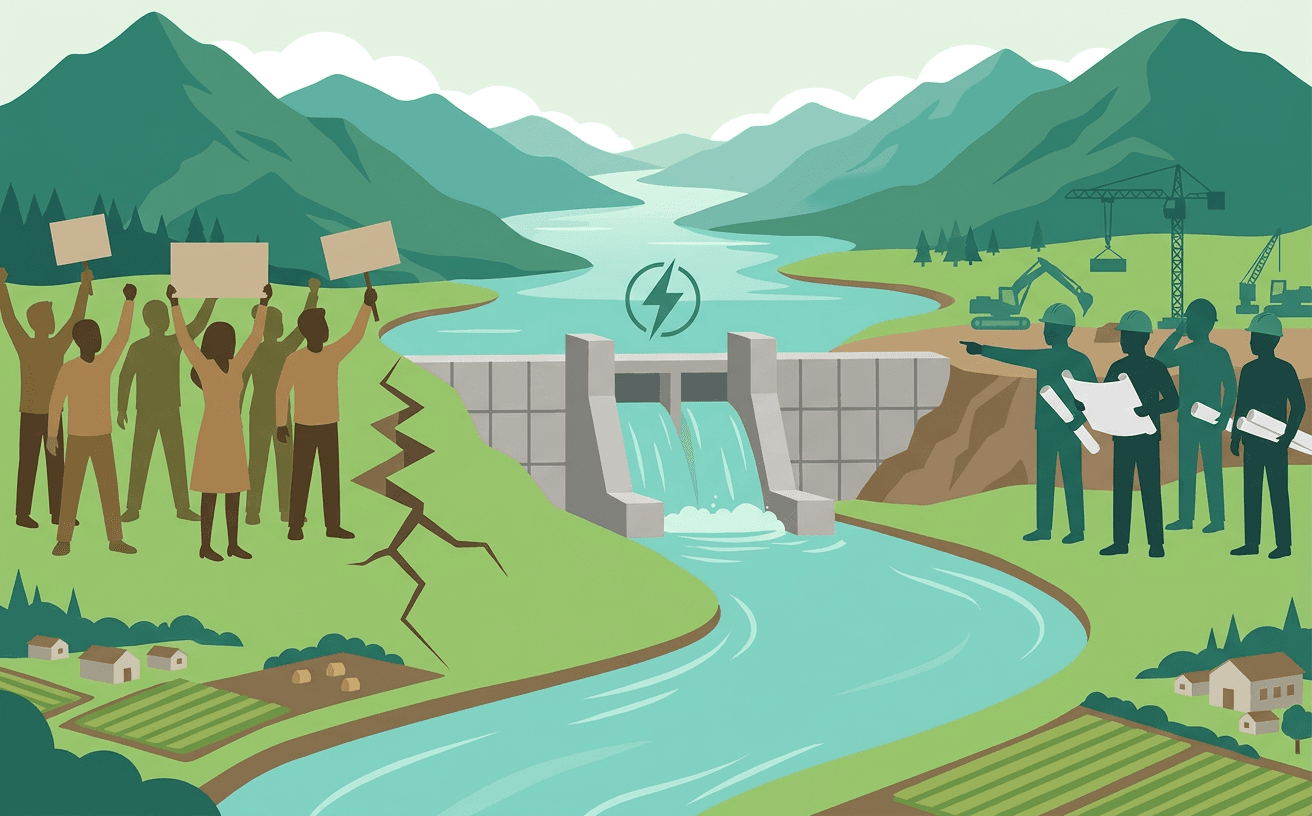
Tensions are escalating in Arunachal Pradesh over the proposed Siang Upper Multipurpose Project (SUMP), a massive hydroelectric initiative by the . Local communities in the Siang district are resisting the project, leading to increased security deployments at proposed sites like Parong village, highlighting the classic conflict between large-scale infrastructure development and indigenous land rights.
Exam perspectives
The controversy surrounding the Siang Upper Multipurpose Project (SUMP) illustrates the complex environmental trade-offs inherent in large-scale hydropower in ecologically sensitive zones. The Siang River, which originates as the Yarlung Tsangpo in Tibet before becoming the Brahmaputra in Assam, flows through the Eastern Himalayas, a recognized biodiversity hotspot. Constructing massive dams in this region necessitates rigorous Environmental Impact Assessments (EIA) as mandated under the Environment Protection Act, 1986. Dam construction often involves significant deforestation, altering riverine ecosystems, and affecting aquatic biodiversity. Furthermore, the Himalayas are a seismically active zone (Zone V), making large dams structurally vulnerable and potentially exacerbating landslide risks. For UPSC, this represents the classic environment vs. development debate, requiring an understanding of how sustainable development goals can be achieved without causing irreversible ecological damage, especially in fragile terrains.
The resistance in Arunachal Pradesh highlights critical issues concerning indigenous rights and inclusive governance in infrastructure projects. Arunachal Pradesh is covered under the special provisions of Article 371H of the Constitution, which grants special responsibility to the Governor regarding law and order, and also protects customary laws and land ownership practices of local tribes. The opposition by local communities to the SUMP underscores the crucial role of Free, Prior and Informed Consent (FPIC) and While the spirit of community rights is important, PESA does not apply to Arunachal Pradesh as it is not a Fifth Schedule area; governance is managed through the Arunachal Pradesh Panchayati Raj Act. or the Forest Rights Act, 2006 (FRA), even though PESA specifically applies to Fifth Schedule areas, the spirit of recognizing community rights over resources is paramount. The heavy deployment of security forces to counter "unrest" suggests a top-down approach, leading to a trust deficit. Governance in such scenarios must prioritize stakeholder consultation and equitable rehabilitation and resettlement (R&R) policies, moving away from coercive measures to ensure long-term stability and project viability.
From a geographical perspective, the Siang river is the central artery of the Brahmaputra river system, contributing significantly to its flow. Understanding the drainage pattern of the Brahmaputra is a frequent UPSC Prelims theme. The Yarlung Tsangpo enters India at a U-turn called the Great Bend near Namcha Barwa, flowing through Arunachal Pradesh as the Siang, and joining the Dibang and Lohit rivers to form the Brahmaputra in Assam. This region is characterized by steep gradients, making it highly suitable for run-of-the-river and large storage hydroelectric projects, which is why the National Hydroelectric Power Corporation (NHPC) is heavily invested here. However, the strategic and geographical reality is that China, as the upper riparian state, is also developing mega-dams on the Yarlung Tsangpo. The SUMP is partly envisioned as a strategic counter to establish prior appropriation rights and manage potential water flow variations caused by Chinese projects, making this not just a domestic issue but a matter of hydro-hegemony and transboundary water security.
Key references
AI-generated study notes, sourced from The Hindu. Verify facts and figures with standard sources.