
The Siang dam — strategic ambition, ecological fallout
Context
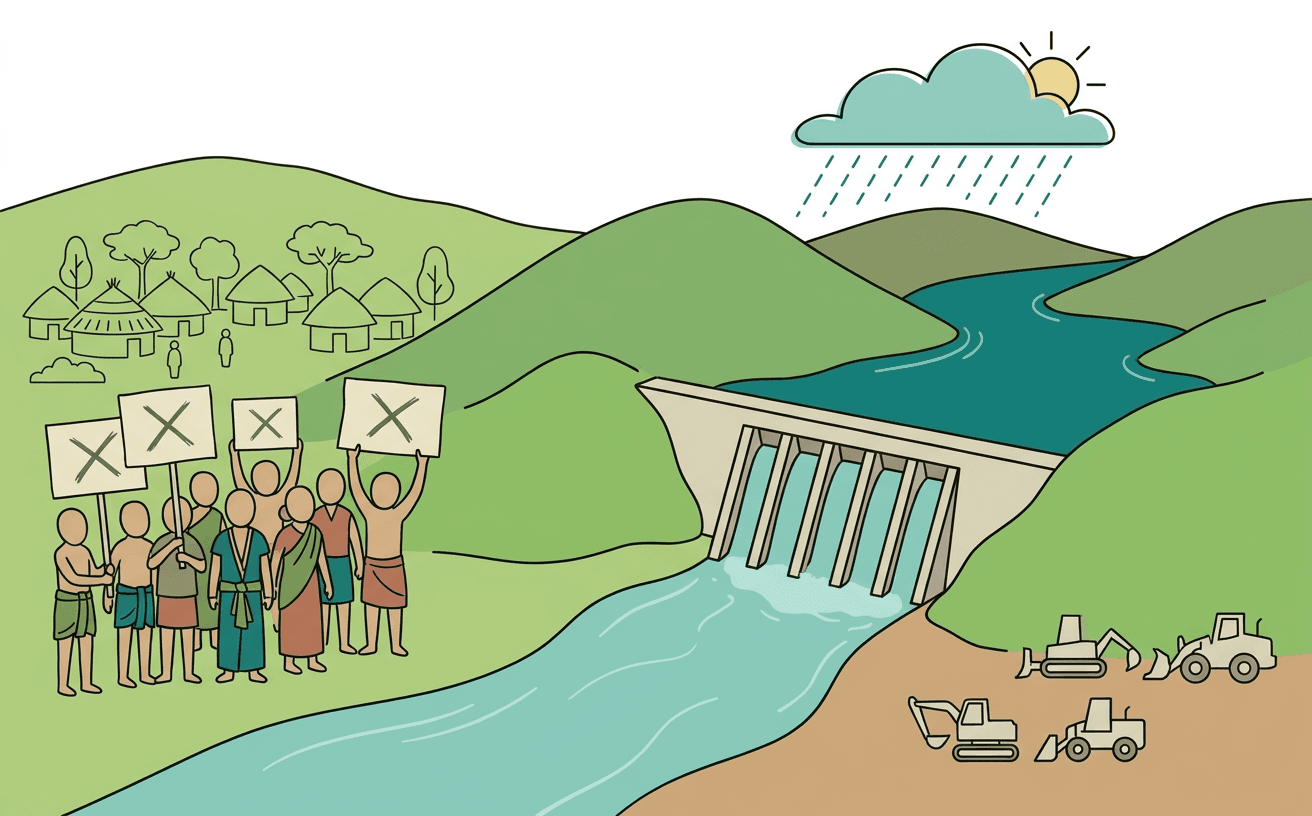
The 11,200 MW (SUMP) in Arunachal Pradesh is facing intense opposition from indigenous communities due to its ecological and social impacts, including the potential displacement of over 1.5 lakh people. India views the dam as a necessary strategic response to China's massive 60 GW on the Yarlung Tsangpo (Brahmaputra) in Tibet, intending to use the SUMP as a buffer against upstream hydrological manipulation.
Exam perspectives
The Brahmaputra River is a critical transnational river, and its management is a major geopolitical issue between India, China, and Bangladesh. China's proposed 60 GW Medog hydropower project on the Yarlung Tsangpo (the upstream name for the Brahmaputra) raises significant riparian security concerns for downstream India. India fears China could use the dam for hydro-hegemony, manipulating water flows—either by withholding water during dry seasons or releasing sudden surges causing floods. To counter this, India is pushing the 11,200 MW Siang Upper Multipurpose Project (SUMP). The SUMP's proposed 9.2 billion cubic meters of live storage is intended to act as a strategic buffer, absorbing sudden floodwaters released by China and ensuring steady downstream flow during artificially induced dry spells. This highlights the complex interplay between infrastructure development and national security in border regions, where water diplomacy and the lack of a formal water-sharing treaty with China amplify tensions.
The conflict over the SUMP exposes the tensions between national security objectives and the protection of indigenous rights under the Indian Constitution. While the Sixth Schedule of the Indian Constitution provides robust protections for tribal lands in specific Northeastern states through Autonomous District Councils, Arunachal Pradesh is largely governed by the Arunachal Pradesh Scheduled Tribes (Protection of Transfer of Land) Act. This Act restricts land transfer to non-tribals but crucially allows government acquisition for 'public purposes' under the Right to Fair Compensation and Transparency in Land Acquisition, Rehabilitation and Resettlement Act, 2013. The core UPSC issue here is the eminent domain power of the state versus customary land rights. The article highlights that legal frameworks often prove insufficient when large-scale projects are justified under the overriding doctrine of national security, leading to forced displacement and the erosion of collective tribal identity, echoing similar conflicts in central India and the Andaman and Nicobar Islands.
Large reservoir dams like the SUMP create profound ecological and social externalities, often leading to development-induced displacement. The proposed submergence of 27 ancestral villages threatens not just physical displacement but the destruction of complex socio-ecological systems. For indigenous communities, the Siang River is not merely a resource but holds deep spiritual significance, and the surrounding forests sustain their livelihood, customary laws, and cultural continuity. This situation underscores the limitations of purely financial compensation and rehabilitation (R&R) models. When tribal communities are displaced from their ancestral lands, they often face a severe existential crisis, losing their social capital and traditional knowledge systems, leading to marginalization in new, unfamiliar environments. From a UPSC perspective, this is a classic case study of the conflict between utilitarian development paradigms (maximizing national energy and strategic interests) and environmental justice (protecting the rights and habitats of vulnerable communities).
Key references
AI-generated study notes, sourced from The Hindu. Verify facts and figures with standard sources.