
The struggle for justice is indivisible
Context
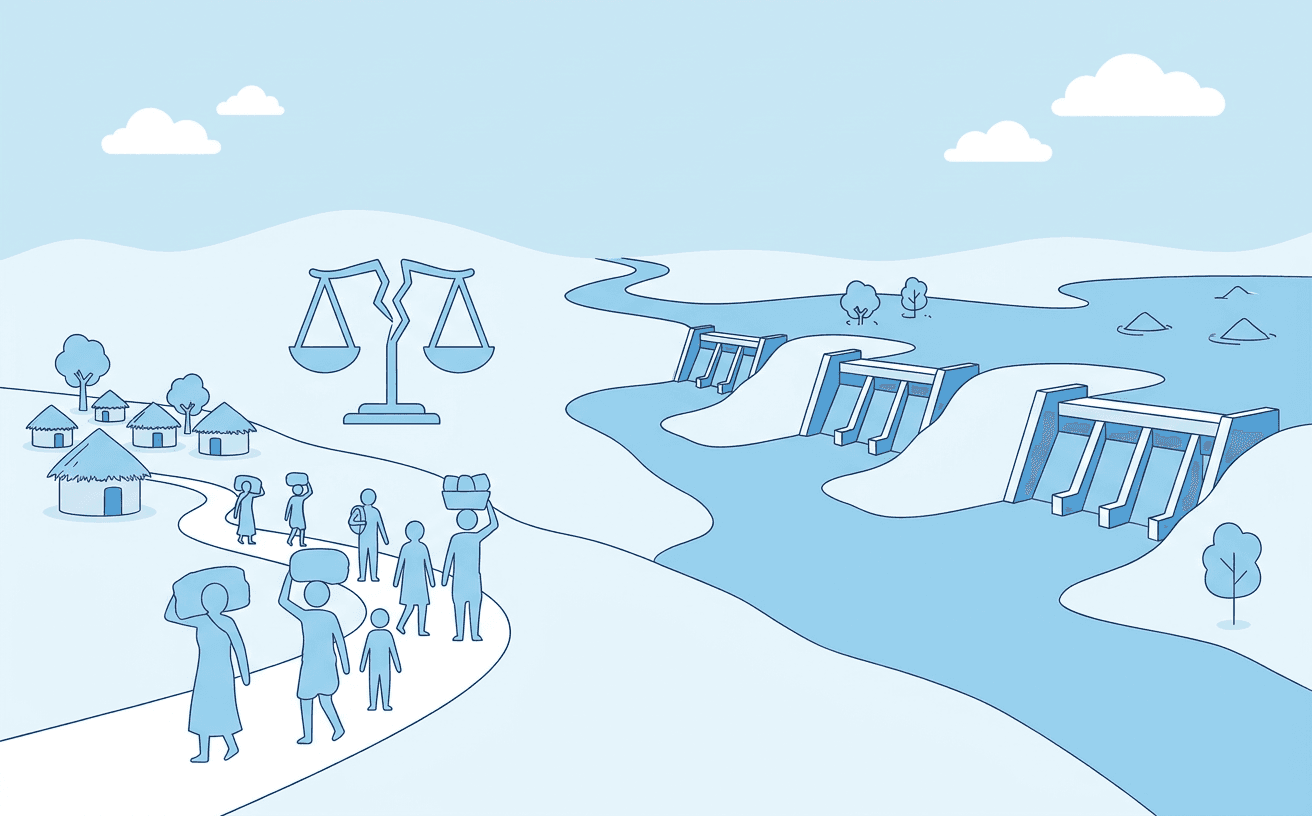
The article highlights the ongoing struggle for justice by Adivasi and Dalit communities facing displacement due to the Majhgaya dam, Runjh dam, and the in Madhya Pradesh. It focuses on the repression of activists, including a young Dalit ward councillor, illustrating the tension between state-driven development projects and the rights of marginalized, project-affected families.
Exam perspectives
The conflict underscores the disproportionate impact of large infrastructure projects on marginalized groups, particularly Adivasis (Scheduled Tribes) and Dalits (Scheduled Castes). Development-induced displacement often leads to alienation of land, loss of traditional livelihoods, and cultural uprooting, disproportionately affecting communities already vulnerable. This raises crucial questions about equitable development and the social cost of such projects. For UPSC Mains, analyze how the Right to Fair Compensation and Transparency in Land Acquisition, Rehabilitation and Resettlement Act, 2013 (LARR Act) is implemented in practice and whether it adequately protects the rights of these communities, particularly regarding prior informed consent and comprehensive rehabilitation.
The arrest of an elected ward councillor on fabricated charges points to potential state overreach and the use of the legal apparatus to stifle dissent against development projects. This highlights the tension between the state's development agenda and its constitutional mandate to protect the fundamental rights of citizens, including Article 19(1)(a) (Freedom of Speech and Expression) and Article 21 (Protection of Life and Personal Liberty). In the context of the Panchayats (Extension to Scheduled Areas) Act, 1996 (PESA), which empowers Gram Sabhas to approve development plans and land acquisition in scheduled areas, the reported flagrant violation of rights suggests a failure of local governance mechanisms. Aspirants must be prepared to discuss the balance between state power, civil liberties, and the crucial role of civil society in demanding accountability.
The Ken-Betwa river-linking project, a key focus of the resistance, is India's first major river interlinking project, aiming to transfer water from the Ken basin (Madhya Pradesh) to the Betwa basin (Uttar Pradesh). While proponents argue it will address water scarcity in the drought-prone Bundelkhand region, critics highlight severe environmental consequences. A significant portion of the Panna Tiger Reserve will be submerged, threatening biodiversity and altering local ecology. The project requires extensive environmental and forest clearances, raising concerns about the rigor of Environmental Impact Assessments (EIA). From a UPSC perspective, understanding the geographical rationale (transferring water from 'surplus' to 'deficit' basins) and critically evaluating the ecological and social trade-offs of such massive hydrological interventions is essential.
Key references
AI-generated study notes, sourced from The Hindu. Verify facts and figures with standard sources.