
Where is the accountability: Kharge slams Modi govt on anaemia report
Context
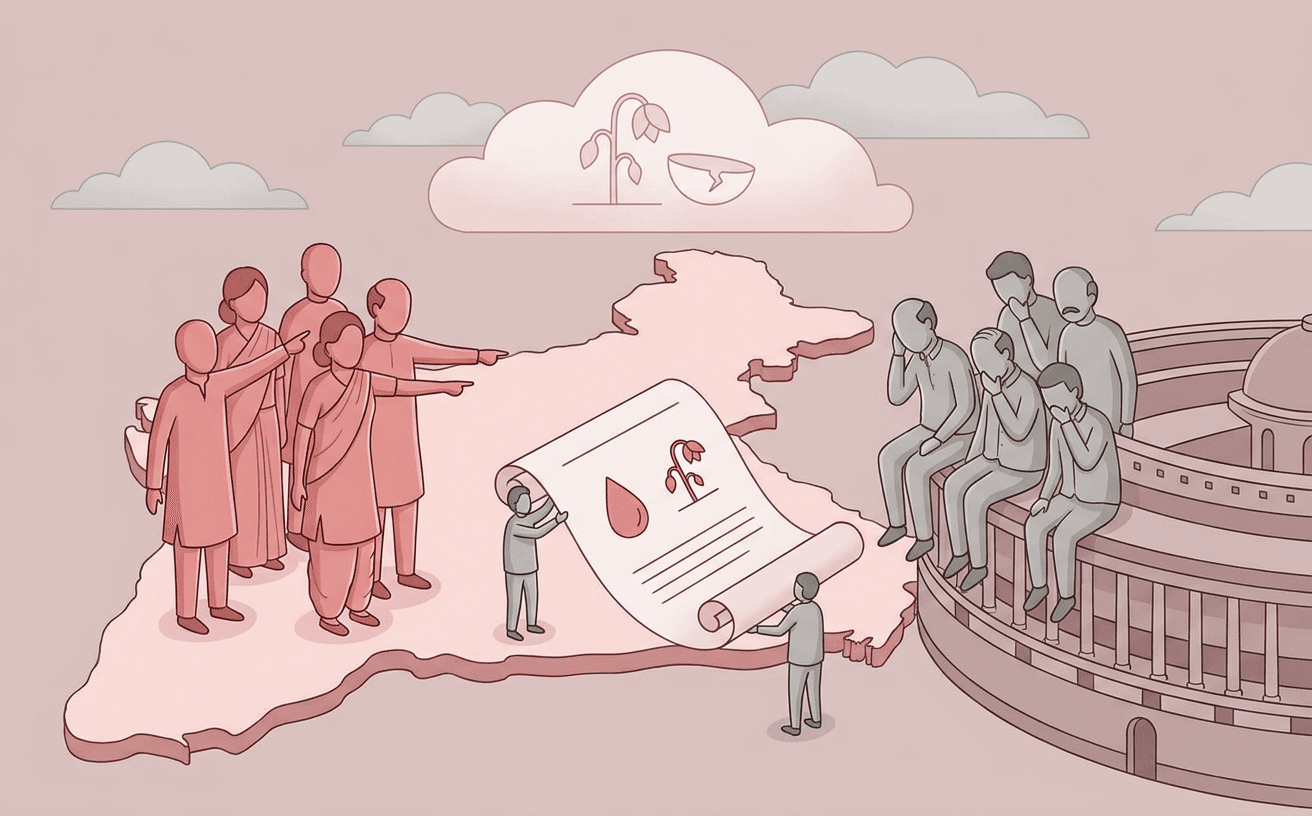
The Indian National Congress has criticized the central government following the release of the report by the , which highlights high levels of anaemia and malnutrition across various demographics in India, particularly in Gujarat. The opposition has questioned the efficacy and accountability of various nutrition-focused schemes, including , citing significant unutilized funds and reduced budgetary allocations for the Ministry of Women and Child Development.
Exam perspectives
The controversy surrounding the SAMPADA report brings the issue of welfare scheme implementation and financial accountability to the forefront of governance debates. The opposition's highlighting of unutilized funds under POSHAN Abhiyaan (the Prime Minister's Overarching Scheme for Holistic Nourishment) and its successor POSHAN 2.0 points to a critical bottleneck in Indian governance: the gap between fund allocation and actual utilization. This gap often stems from systemic issues such as lack of administrative capacity at the local level, delayed fund transfers from the center to the states, and complex bureaucratic procedures. Furthermore, the reported reduction in the budgetary share for the Ministry of Women and Child Development raises questions about the government's prioritization of maternal and child health. For UPSC Mains, candidates must analyze how accountability mechanisms, such as social audits and outcome budgeting, can be strengthened to ensure that allocated funds translate into tangible improvements in nutritional indicators.
The data presented in the SAMPADA report and the NFHS-6 underscores the persistent challenge of malnutrition and anaemia in India, which severely hampers the realization of the country's demographic dividend. The high prevalence of anaemia among women of reproductive age (55.9%) and children (42% among 1-4 years) is a major public health concern, as it directly impacts maternal mortality, child development, and overall productivity. The contrasting performance of states, with Kerala showing relatively lower prevalence and Gujarat and Chhattisgarh showing higher rates, highlights regional disparities in health outcomes. This necessitates a localized approach to public health interventions, moving beyond a one-size-fits-all strategy. The government's emphasis on "mild" anaemia presenting an opportunity for early intervention suggests a need to strengthen primary healthcare infrastructure, particularly the Anganwadi system, to provide timely nutritional counseling and supplementation.
The political discourse surrounding the SAMPADA report illustrates the role of the opposition in holding the executive accountable, a cornerstone of parliamentary democracy. The opposition's use of government-commissioned data to critique policy outcomes demonstrates the importance of data transparency and independent research institutions like the ICMR in informing public debate. This situation also touches upon the concept of cooperative federalism, as health is primarily a State subject under the Seventh Schedule, yet the central government plays a crucial role through centrally sponsored schemes like POSHAN Abhiyaan. The disparity in state-level performance, despite national-level schemes, suggests that the success of health interventions heavily depends on state capacity and political will. UPSC aspirants should consider how the interplay between central policies and state implementation affects the realization of the Right to Health, which is read into Article 21 of the Constitution.
Key references
AI-generated study notes, sourced from The Hindu. Verify facts and figures with standard sources.