
Why is there variation in India’s fertility rates? | Explained
Context
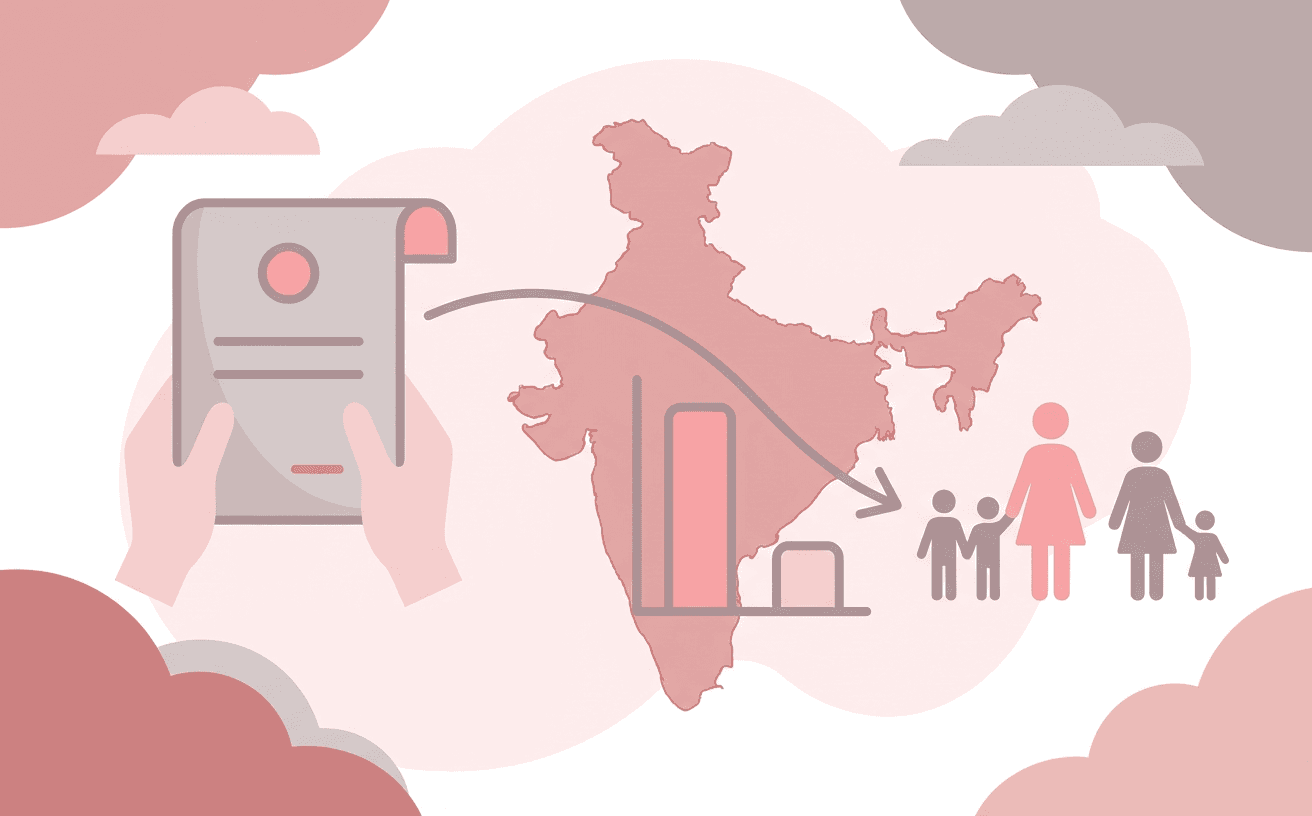
The (SRS) Statistical Report of 2021, released by the , indicates that India's national (TFR) has stabilized at 2.0. However, this national average masks significant regional disparities, with states like Bihar recording a TFR of 3.0, while West Bengal and Delhi are at 1.4. This data highlights an ongoing demographic transition in India, characterized by an overall decline in fertility rates over the past decade, though progressing at different speeds across various states.
Exam perspectives
The stabilization of India's national TFR at 2.0 indicates that the country has reached replacement level fertility (the level at which a population exactly replaces itself from one generation to the next, typically considered to be 2.1). This is a crucial demographic milestone, suggesting a long-term stabilization of population growth. However, the wide regional variation points to deeper socio-economic disparities. Factors influencing TFR include female education levels, access to family planning and contraceptives, maternal mortality rates, age at marriage, and overall socio-economic development. States with higher TFRs often face challenges in these areas, requiring targeted interventions. The National Population Policy, 2000 aimed to achieve a stable population by 2045, and understanding these regional nuances is essential for policy recalibration.
From a human geography perspective, the regional variation in TFR highlights a distinct demographic divide in India. The southern states, along with some western and eastern states, have largely achieved or fallen below replacement level fertility. In contrast, a cluster of northern and central states (often referred to as the Empowered Action Group or EAG states, including Bihar, Uttar Pradesh, Rajasthan, Madhya Pradesh) continue to experience higher fertility rates. This geographic polarization has significant implications for future population distribution, internal migration patterns, and resource allocation. The areas with higher TFR will contribute significantly to India's future demographic dividend, necessitating investments in education, healthcare, and employment generation in these specific regions to harness this potential.
The data released by the Office of the Registrar General of India (under the Ministry of Home Affairs) through the Sample Registration System serves as a vital tool for evidence-based policymaking. The SRS provides reliable annual estimates of birth rate, death rate, infant mortality rate, and maternal mortality ratio. The diverse TFRs demand a shift from a 'one-size-fits-all' national population policy to decentralized, state-specific strategies. States with TFRs well below 2.1 might need to focus on aging populations and potential labor shortages in the future, while states with high TFRs must prioritize reproductive health services, women's empowerment, and child survival programs. This scenario underscores the importance of cooperative federalism in addressing complex socio-demographic challenges.
Key references
AI-generated study notes, sourced from The Hindu. Verify facts and figures with standard sources.